The Tobacco of La Soledad de Maciel
In the community of Soledad de Maciel, located in the Costa Grande region of Guerrero, Mexico, artisanal tobacco production is an ancient tradition passed down from generation to generation. This process, steeped in local knowledge and careful practices, begins in December with the preparation of the seedbed. Once the seeds have been "despicadas" (separated from their capsule), they are scattered following the direction of the wind. As the days pass, the surface of the seedbed changes color: first, it acquires a brown hue and then turns green, similar to the mud in ponds. Approximately 15 days later, the first seedlings begin to sprout and are transplanted to the final planting site.
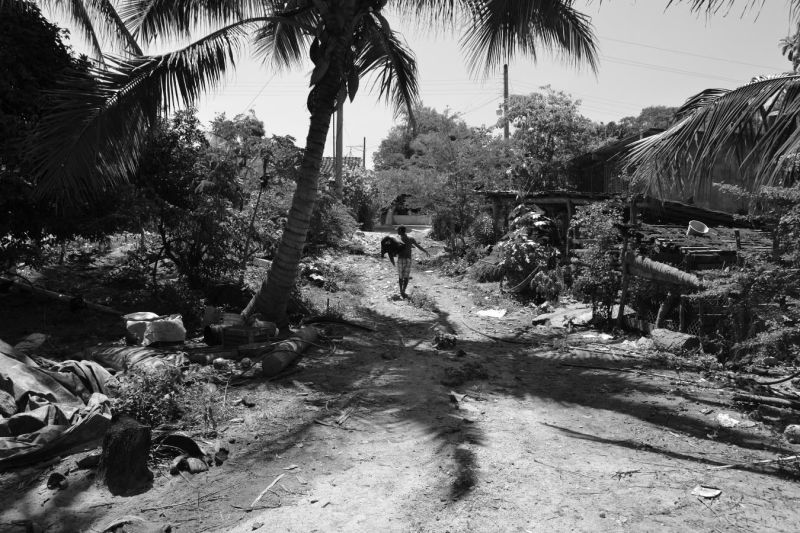
During its growth, it is necessary to remove the "suckers," or side shoots, from each plant to ensure its healthy development. The tobacco harvest begins in March and continues through May.
The people of Soledad de Maciel recognize five distinct stages in the plant's development: Desoje, Upa, Upa Flor, Flor y Banderilla.
-
The Desoje stage includes leaves that are generally discarded, although they are sometimes stored to prepare natural insecticides.
-
The Upa is a light leaf with a mild flavor, suitable for those new to its consumption.
-
The Upa Flor has a stronger flavor and is only tolerated by experienced consumers; smoking it without preparation may cause dizziness, vomiting, or diarrhea. According to tradition, these discomforts disappear after taking a cold water bath.
-
The Flor is considered the best part of the plant, as its leaves are large and have a concentrated flavor.
-
Finally, the Banderilla is a strong but smaller leaf, produced in lesser quantities.
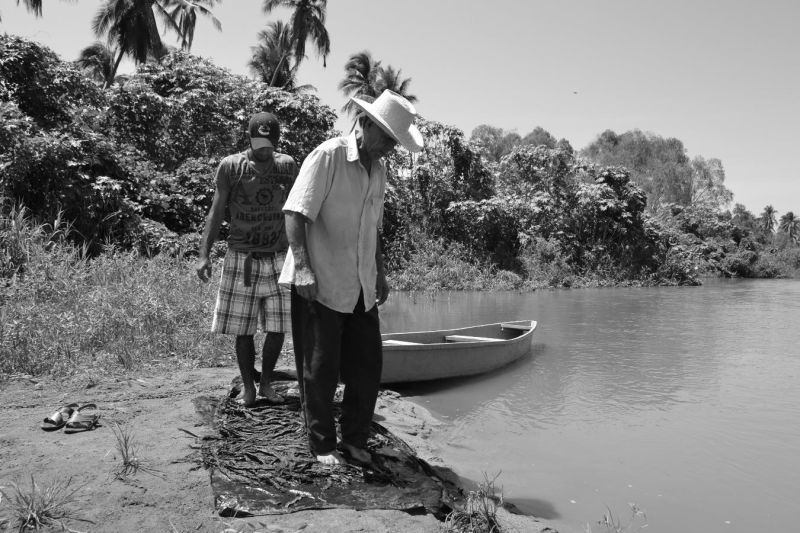
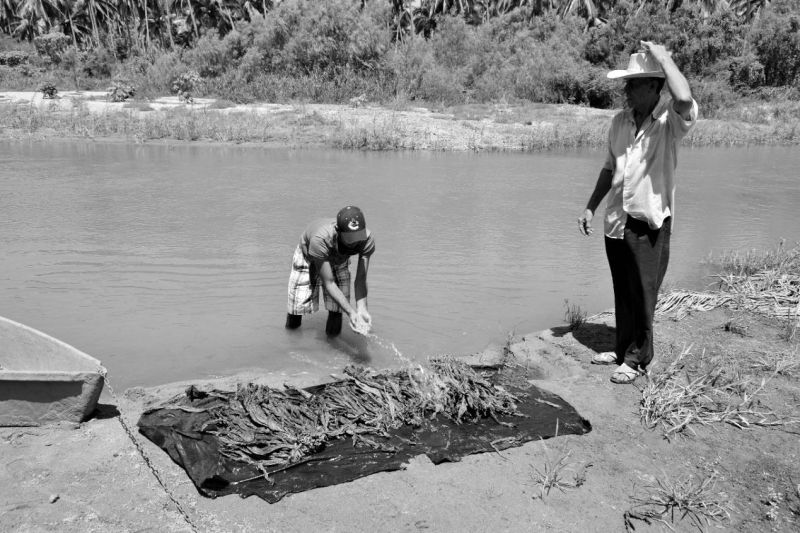
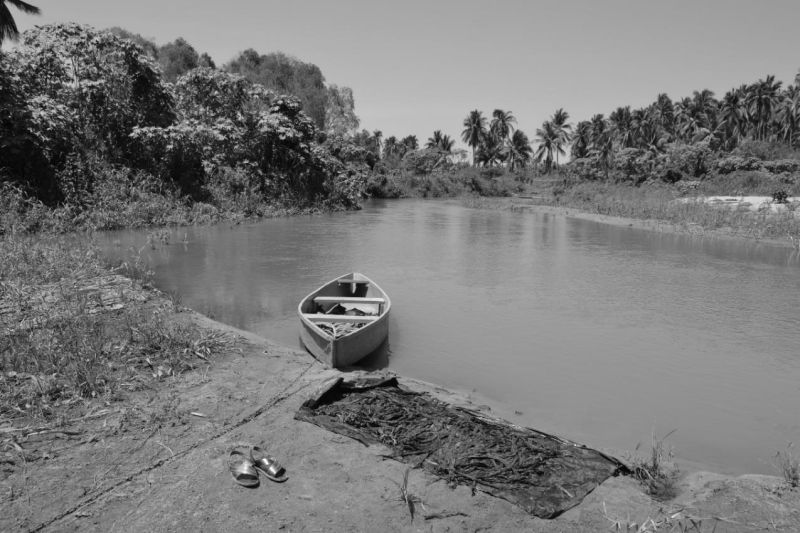
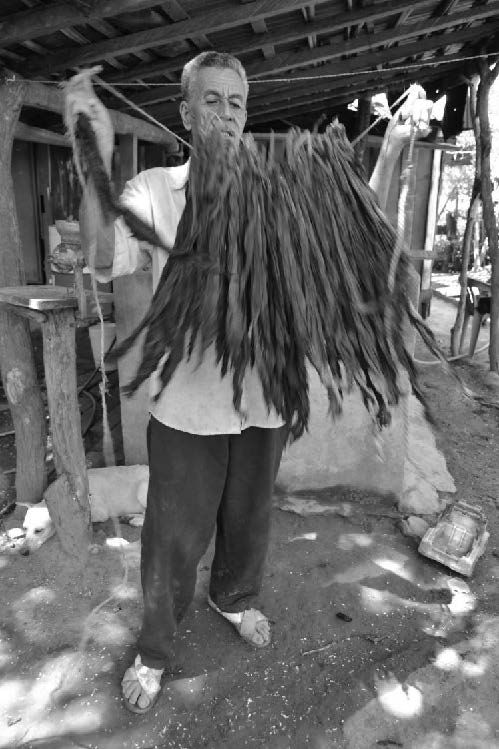
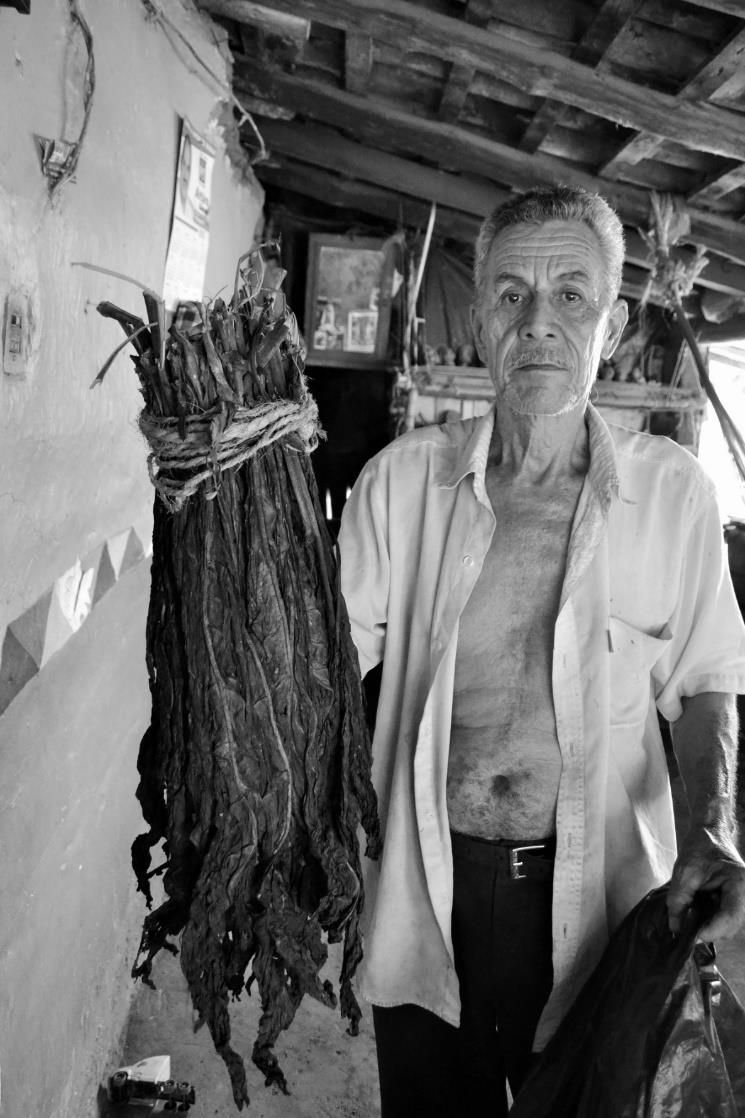
Once harvested, the tobacco is cured and sorted according to these same categories. The curing process is complex and requires great care. After the harvest, the plants are cut and left to rest under a palapa for four days. They are then strung up and hung to dry. Afterwards, they are pressed overnight, which causes them to release a substance called "honey." To remove it, the leaves are washed in the river and spread out on plastic sheets on the beach. In a distinctive step unique to this community, people dance on the tobacco to flatten it, alternating with sun-drying for periods of five to eight minutes, until the leaves take on a deep black color.
Next, the leaves are pressed again for one day and then hung for five or six more days to dry the central vein. Once dry, they are carefully separated to prevent mold or the tobacco from spoiling. Finally, they are stored with a weight on top, which keeps the leaves pressed.
The cured tobacco can remain in good condition for up to five years. During this time, it receives an additional treatment with infusions of guava or pomelo leaves, which are applied to keep the leaves moist and prevent them from drying out.
Please translate the next text as you are a english natural speaker, do not self reference and don't explain what are you doing.
En Soledad de Maciel, el tabaco no solo se fuma: tiene múltiples usos dentro de la medicina tradicional, la agricultura y las prácticas simbólicas. Por ejemplo, las hojas frescas se colocan sobre heridas profundas para prevenir infecciones. También se emplean en el tratamiento de barros y espinillas, combinándolas con ungüentos como el vaporub. En el ámbito agrícola, las hojas remojadas en agua se usan como insecticida natural para fumigar cultivos y eliminar parásitos como pulgas y garrapatas en perros y ganado.
Desde una perspectiva simbólica, el tabaco posee un carácter protector. Se cree que puede resguardar a los recién nacidos de los "chaneques", seres míticos del folclore local. Por ello, es común atar una hoja de tabaco a la mano izquierda del bebé o colocarle un escapulario hecho con los botones de la semilla, para evitar el mal de ojo y mantener alejadas las malas energías.
Así, el tabaco en Soledad de Maciel representa mucho más que una planta: es un símbolo de identidad, conocimiento comunitario y conexión con la naturaleza.



Comments
The comments reflect the personal opinions of users and do not represent the views of the site administrators.
There's no comments yet